

















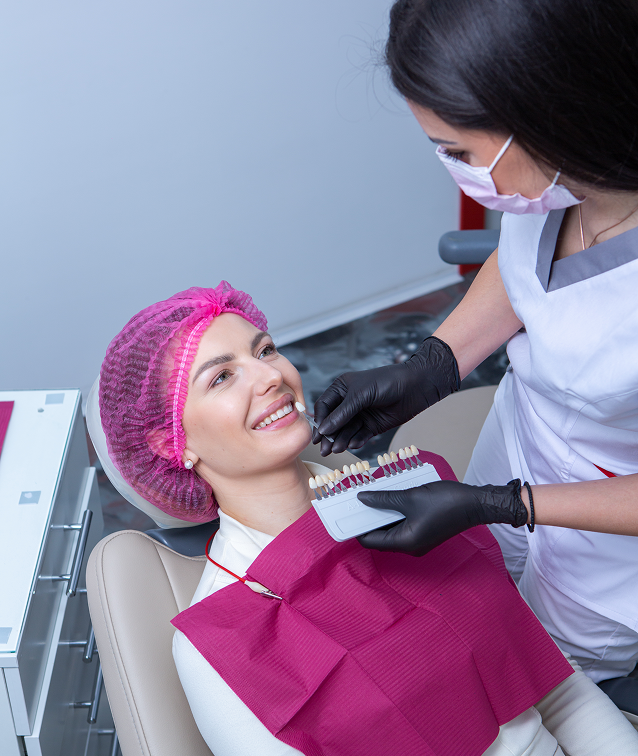
Artistry Meets Care in Every Dental Veneers Procedure
SMILE TRANSFORMATION
What to Expect During Treatment
Chipped, uneven, or discoloured teeth can affect more than just your appearance—they may impact how you feel when you smile, speak, or laugh. It’s common to feel discouraged when whitening or other options don’t quite deliver the change you’re hoping for. Some people hesitate to seek cosmetic treatment due to uncertainty around the process or concerns about comfort and outcomes. If that sounds familiar, you’re not alone in wanting clarity and confidence before moving forward.
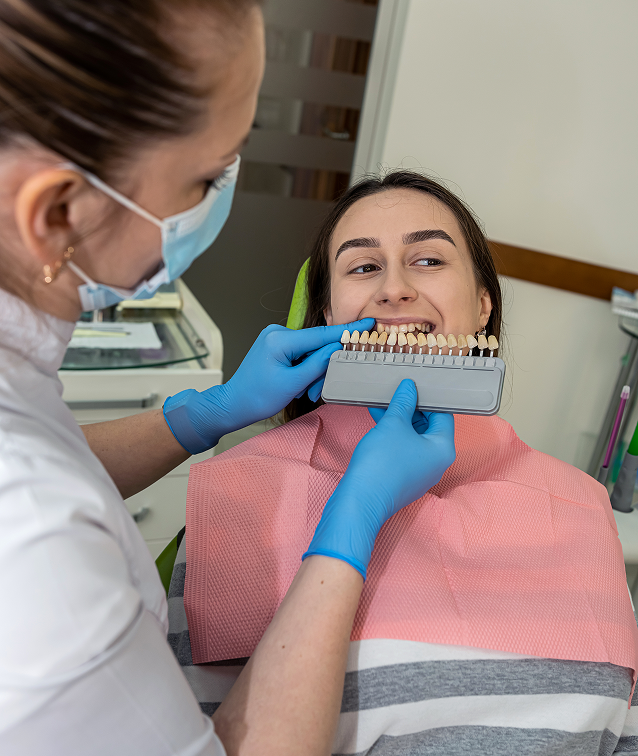
A dental veneers procedure involves removing a thin layer of enamel and bonding custom-made shells to the teeth. This is an irreversible treatment option that may change tooth appearance. Suitability, risks, and likely outcomes vary between patients and should always be discussed with a registered dentist before proceeding.
ENHANCE YOUR SMILE
Enjoy the Lasting Benefits of the Dental Veneers Procedure
Naturally Balanced Smile Aesthetics
Dental veneers are custom-made to blend with your teeth. This creates a smooth, natural-looking result that enhances the shape, size, and overall appearance of your smile and face.
Durable and Stain-Resistant
Made from strong materials like porcelain or composite resin, veneers resist everyday stains. With proper care, they can maintain their appearance and function for many years.
Minimal Tooth Preparation
Veneers require minimal enamel removal compared to crowns, making the procedure more conservative. This approach helps preserve more of your natural tooth structure and supports long-term oral health.
Considering Dental Veneers? Book Your Consultation
If you’re exploring dental veneers in Perth, we begin with a personalised consultation. Your oral health, goals, and preferences guide the recommendations provided for treatment.

SUITABLE PATIENTS
Who Is a Good Candidate for the Dental Veneers Procedure?
1 Mild Cosmetic Concerns
2 Persistent Tooth Discolouration
For individuals with deep or internal stains that don’t respond well to whitening, veneers may be an option. They cover the visible surface of teeth, helping to improve brightness, mask discolouration, and create a more consistent smile appearance.
3 Good General Oral Health
Healthy gums and teeth without active decay are important for veneer placement. Veneers are effective when bonded to stable, disease-free enamel. Maintaining oral health helps promote the comfort, appearance, and durability of this cosmetic procedure.
4 Realistic Expectations in Treatment
Those with realistic expectations about what veneers can and can’t do are often well-suited. Veneers improve the look of teeth but won’t address major alignment issues. Understanding the treatment’s scope helps set achievable goals and long-term satisfaction.
HOW IT’S DONE
What’s Involved in the Dental Veneers Procedure
Smile Consultation
Your dentist will assess your smile, discuss your goals, and examine your oral health. This helps determine whether veneers are a suitable treatment option for your needs.
Tooth Preparation
A thin layer of enamel is gently removed to make room for the veneers. Impressions are also taken so that the final veneers fit comfortably and look natural.
Veneer Trial Phase
Temporary veneers may be placed to preview the look and feel of your future smile. This step allows for adjustments before the final veneers are made.
Final Placement
Once your custom veneers are ready, they’re checked for fit and bonded to your teeth. The finished result is secure, functional, and designed to blend with your smile.
TREATMENT LIMITS
What Patients Should Know About Dental Veneers Risks and Limitations
1 Irreversible Tooth Enamel Removal
2 Potential for Veneer Damage
3 Colour Matching Limitations
4 Not Suitable for Everyone
Accessible Dental Care
Payment and Funding Options for Eligible Patients
We provide information about available payment and funding options that eligible patients may access to assist with managing treatment costs.
Disclaimer:
- Flexible payment options are available (e.g. Afterpay, Denticare, SuperCare).
- All payment plans and subsidies are subject to provider eligibility criteria, approval processes, and individual circumstances.
- Terms, conditions, fees, and lending criteria apply.
- Please speak with our team for full details before proceeding.
Afterpay
Afterpay enables eligible patients to spread dental treatment costs across four instalments. This option may assist with scheduled payments. Terms and conditions apply, and patients should confirm their eligibility before using this service.
Learn MoreDenticare
Denticare provides approved payment plan options for eligible patients. This option is subject to approval and eligibility criteria, and patients should confirm details directly with Denticare before starting treatment.
Learn More

Health Funds
We accept most major health funds for eligible dental services. Benefit amounts differ by fund and level of cover. Patients should confirm entitlements with their health fund before treatment, as benefits and gap payments vary between providers.
Learn MoreSuperCare
Through SuperCare, eligible patients may apply for early release of superannuation to fund approved dental treatments. This process is subject to ATO approval and strict eligibility criteria. Patients should confirm their eligibility before undergoing a procedure.
Learn MoreMPDSS
The Metropolitan Patient Dental Subsidy Scheme (MPDSS) may provide eligible patients with subsidised dental care. Availability depends on specific criteria set by government health services. Patients should confirm eligibility and conditions with their local health authority before booking.
Learn MoreCDBS

The Child Dental Benefits Schedule (CDBS) provides eligible children aged 0–17 with access to certain dental services, funded by Medicare. Conditions and annual limits apply. Parents should confirm eligibility through Medicare before commencing treatment under the scheme.
Learn MoreDVA
Dental care may be available to eligible Department of Veterans’ Affairs (DVA) health card holders. Treatment and benefits depend on card type and entitlements. Patients must confirm eligibility and requirements with DVA before accessing services.
Learn MoreHealth Funds
We Accept Most Health Funds for Transparent, Easy-to-Manage Dental Visits
MEET YOUR DENTISTS
Dedicated Dental Team Focused on Comfort and Care
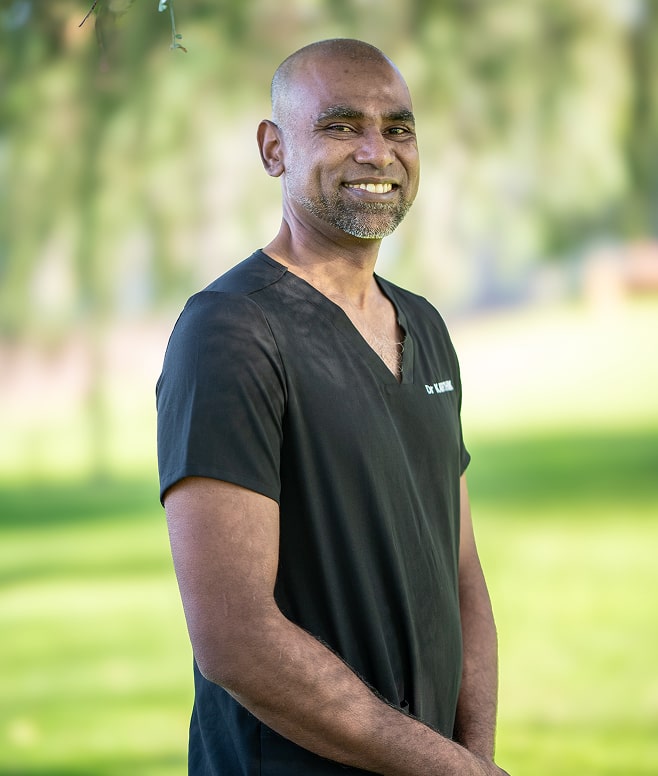
Dr. Karthik is a fully qualified dentist with more than 23 years of clinical experience. Since completing his Bachelor of Dental Surgery in 2002, he has developed a strong interest in surgical procedures, dental implantology, and clear aligner systems. He holds a Master’s degree in Clinical Implantology from UCLA and has undergone comprehensive training in digital treatment planning and orthodontic aligner therapy.
His work is primarily focused on surgical extractions, implant placement, and managing complex treatment plans. He is dedicated to continuous learning and consistently integrates evidence-based techniques into his daily practice. Outside of dentistry, he enjoys playing backyard cricket and badminton with his sons, as well as practising mindfulness and maintaining a balanced lifestyle.
Dr. Karthik earned a Master’s in Clinical Implantology from UCLA, focusing on implant systems, surgical techniques, and oral rehabilitation.
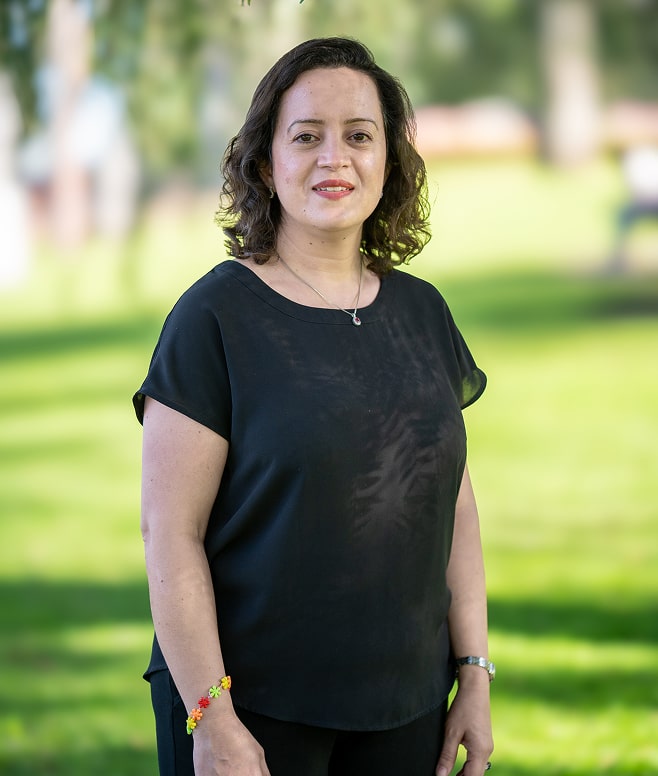
Dr. Behnoush is a dentist with more than 15 years of clinical experience. She gained her qualification through the Australian Dental Council in 2008 and has been practising in the country since 2009. She communicates clearly with patients and takes time to explain treatment options, especially during procedures that may be new or feel overwhelming.
She provides care across all aspects of general dentistry, with special interests in Invisalign, cosmetic treatments, and restorative work, such as crowns and bridges. She is dedicated to continuous learning and regularly attends continuing education programs. Outside of dentistry, she enjoys family time, active living, and being engaged in her local community.
Dr. Behnoush is a member of the Australian Dental Association and upholds national clinical standards and professional codes of conduct.
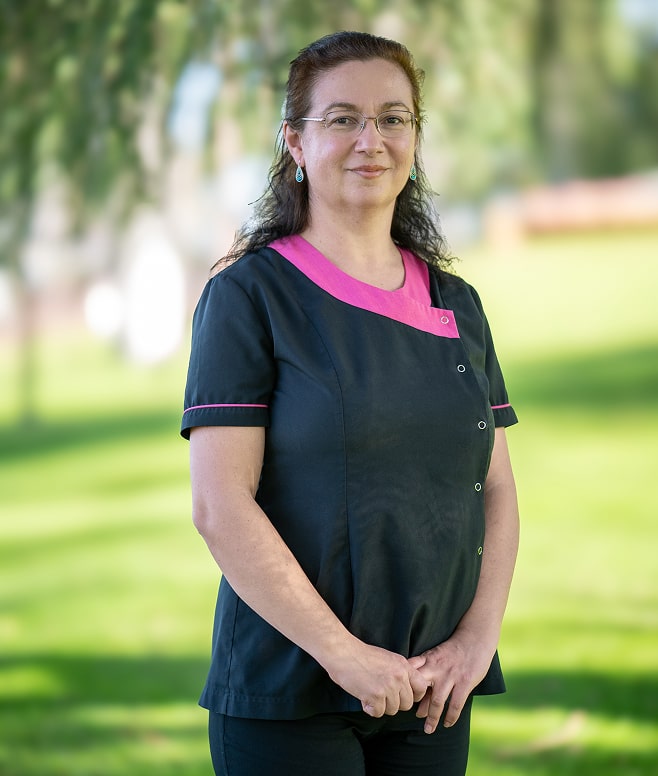
As a Senior Dentist, Dr. Julija focuses on preventive care and communication. She completed her Bachelor of Dental Surgery in 2006 and has more than 15 years of experience. Her calm, friendly approach helps patients feel at ease. She takes the time to explain treatment options and values building lasting relationships through clear and respectful communication.
She provides a wide range of dental services, including preventive, cosmetic, paediatric, extraction, and alignment treatments. She tailors treatment plans to each individual and stays current with evolving techniques. She enjoys cooking and cycling and regularly joins her family in the City to Surf walking challenge, combining fitness with community involvement.
Dr. Julija participates in professional development courses both domestically and internationally to stay current with the latest developments in dentistry.
Dr. Julija is a member of the Australian Dental Association - Western Australia (ADAWA), upholding ethical practice and professional standards in dentistry.
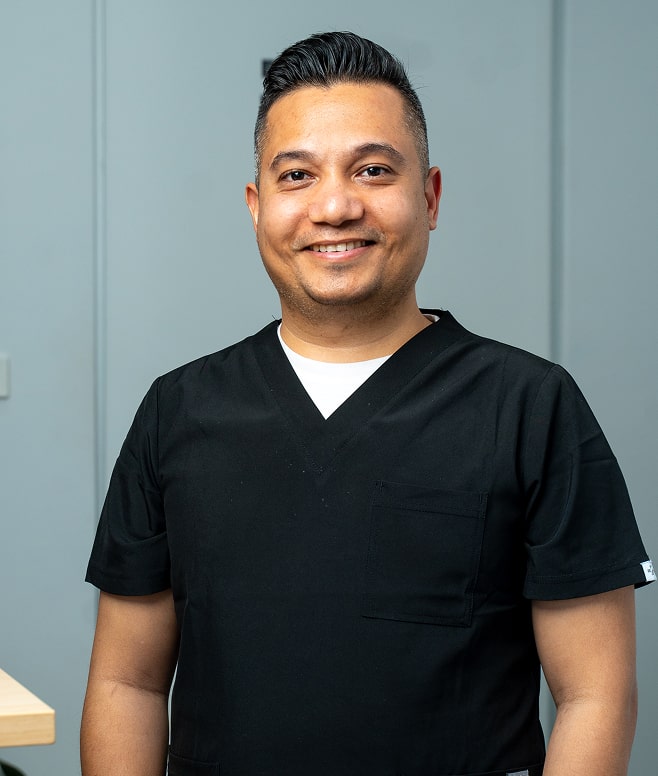
Dr. Siddharth is a dentist providing prosthodontic and implant care. He also provides restorative care, including dentures, crowns and bridges, veneers, and full mouth rehabilitation. He focuses on detail and long-term treatment planning, using a methodical approach shaped by patient goals and needs. His calm and clear communication helps patients navigate their treatment with clarity and understanding.
He enjoys creative pursuits, such as drawing, sketching, cooking, and dancing. These interests reflect his attention to shape, form, and balance—qualities that align with his approach to dental restoration and aesthetics. He works closely with patients on treatment options that are functional and designed with comfort and longevity in mind.
Dr. Siddharth completed his dental degree in India prior to registering locally, adding international clinical training to his restorative and implant work.
- Dr. Siddharth is a Fellow of the Indian Society of Oral Implantologists (ISOI), a professional body dedicated to implant training and clinical development.
- He also holds a Fellowship with the International Congress of Oral Implantologists (ICOI), an organisation that promotes global collaboration in implant dentistry.
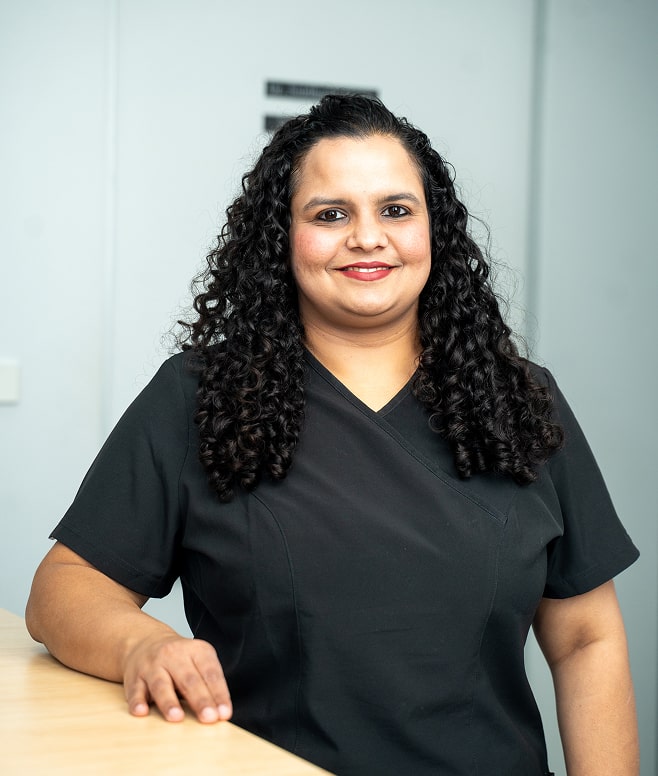
Dr. Abha is a dentist with a Master’s degree in Periodontology and Implantology. She gained her dental qualification in India and registered with the Australian Dental Council. Her background in surgical and implant dentistry is combined with a calm, clear approach to patient care. She focuses on communication and helping patients understand treatment options that suit their individual needs.
She provides preventive, surgical, and implant treatment with careful attention to detail. She applies modern techniques guided by current research and encourages patients to remain committed to their oral health. Outside of dentistry, she spends her time with family, reading, listening to music, travelling, and exploring new places and cultures.
- Dr. Abha completed a Master’s degree in Periodontology and Implantology in India before gaining registration to practise dentistry locally.
- She frequently attends workshops and conferences domestically and internationally to maintain knowledge of current trends and developments in clinical techniques.
- Dr. Abha is a Fellow of the International Congress of Oral Implantologists (ICOI), an international organisation focused on education in implant dentistry.

Dr. Amy joined the team after completing her Doctor of Dental Medicine at the University of Western Australia. She also holds a PhD in Materials Science from Curtin University, which provided valuable insight into dental materials and their clinical performance. She provides general dental care with a particular interest in implants, orthodontics, and clear aligner treatment, such as Invisalign.
She engages in continuing professional education to stay aligned with advancements in general and restorative dentistry techniques. She takes care to create a calm, comfortable environment, especially for patients who may feel anxious about dental visits. She is fluent in both Mandarin and Cantonese and communicates clearly with patients of all backgrounds.

Dr. Bashi offers preventive, restorative, paediatric, endodontic, prosthodontic, and minor oral surgery care in both private and community settings. Her background in clinical dentistry and public health shapes her patient-focused approach, particularly in education and prevention. She communicates clearly with patients of all ages and is committed to providing care that is personalised and responsive to each patient’s unique needs and treatment goals.
During her postgraduate studies, she completed an internship with a healthcare consulting team, contributing to public health projects in various regions. She continues to pursue professional development and enjoys combining clinical care with broader health perspectives. In her spare time, she enjoys basketball, scenic photography, video editing, travel, and exploring diverse cuisines.
Dr. Bashi completed her Bachelor of Dental Surgery at the University of Peradeniya in Sri Lanka before gaining registration to practise in the country.
- Dr. Bashi is a member of the Australian Dental Association and follows its standards for continuing education and ethical patient care.
- She is also registered with the Sri Lanka Medical Council, reflecting her international clinical training and professional background.
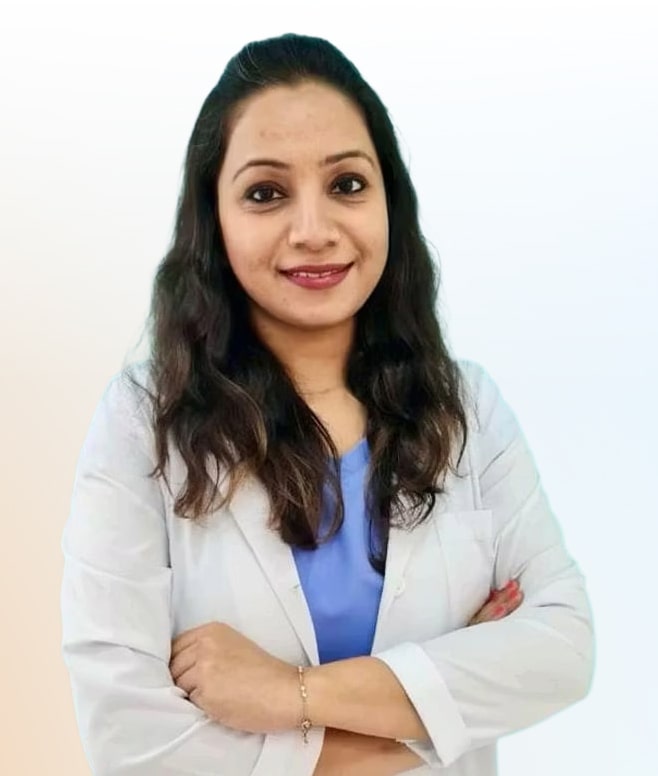
Dr. Neha is a general dentist with postgraduate training in paediatric dentistry and over 13 years of clinical experience. She worked for nine years in Abu Dhabi, focusing on children's oral health. She recently gained her local registration through the Australian Dental Council and now provides care to patients of all ages, including restorative, preventive, and paediatric dentistry.
She has a particular interest in root canal therapy, minimally invasive treatment, and inhalation sedation for anxious patients. She values communication and clarity in every appointment and aims to create a calm environment tailored to each patient’s needs. Her interests outside of dentistry include travel, creative writing, and spending time with her family.
Dr. Neha holds a Bachelor of Dental Surgery and a Master’s in Paediatric Dentistry and has worked clinically in Abu Dhabi for over nine years.
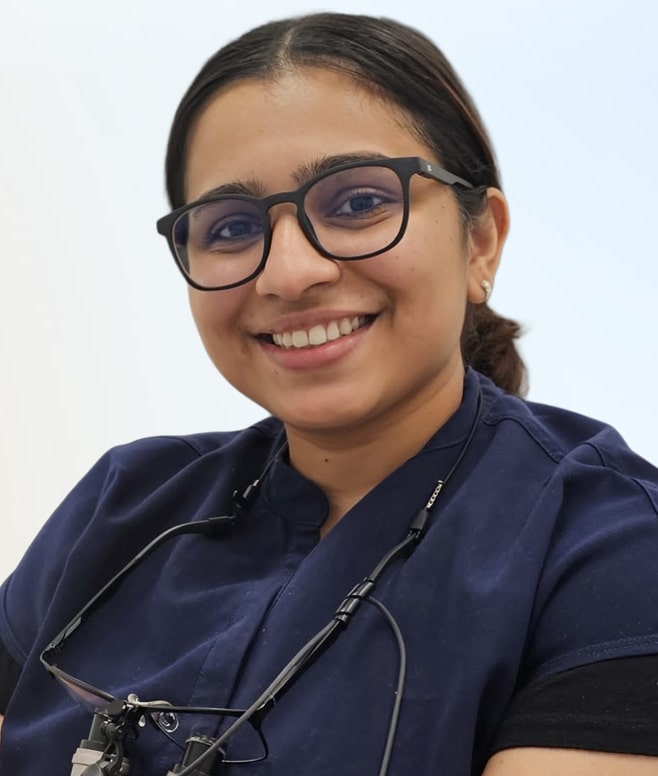
Dr. Karthika completed her Bachelor of Dental Surgery in India and worked in both public and private clinics before settling in Perth. She provides general and restorative care, with a strong interest in preventive dentistry and early intervention. She values collaboration and patient education, helping patients feel more comfortable in making informed choices about their dental care.
She continues to expand her clinical knowledge through continuous professional development. She works gently and thoughtfully with nervous patients, helping them feel more at ease during their appointments. Aside from her work in dentistry, she enjoys gardening, trying new recipes, tackling home DIY projects, and sharing meals with family and friends.
Dr. Karthika earned her Bachelor of Dental Surgery overseas and later gained registration to practise as a general dentist locally.
GET INFORMED
Frequently Asked Questions
What is the step-by-step procedure for dental veneers?
The dental veneer process is designed to enhance your smile with a natural-looking and functional outcome. Here’s what usually happens at each stage:
- Initial consultation:
Your dentist will begin by discussing your smile goals and evaluating your oral health. This includes assessing your enamel, bite alignment, and any dental concerns to determine if veneers are a suitable option for you. - Smile design planning:
If veneers are appropriate, your dentist will help you plan the desired outcome. This may involve creating a digital smile preview or a physical mock-up, allowing you to see how your veneers are expected to look. - Tooth preparation:
A thin layer of enamel, usually 0.3-0.7 mm, is removed from each tooth’s front surface to accommodate the veneers. Local anaesthesia may be used for your comfort during this stage. - Impressions and shade selection:
Your dentist will take detailed impressions of your prepared teeth to achieve a precise fit. They will also assist in selecting a veneer shade that matches your natural teeth and suits your overall appearance. - Temporary veneers (if required):
Temporary veneers may be placed to protect your teeth and preview the results while the dental laboratory makes the final versions. - Veneer fitting and bonding:
At your next visit, your dentist will check the fit, colour, and shape of each veneer. Once you’re satisfied with the look, the veneers are bonded using a durable adhesive that offers stability while allowing for future dental care. - Bite check and polish:
Your bite will be carefully assessed to confirm that your teeth meet comfortably. The veneers will then be polished to blend smoothly with your natural teeth, creating a smooth and balanced appearance. - Follow-up appointment:
A follow-up appointment may be recommended to review how your veneers are settling and to address any questions. This visit helps check whether your bite remains comfortable and your oral health is maintained.
Knowing what’s involved in our dental veneers procedure can give you a clearer picture of how the treatment is planned and carried out. If you’re considering veneers, we recommend booking a consultation to discuss your options and receive advice tailored to your individual needs.
How long does it take to get dental veneers?
The dental veneer process usually spans three main visits over two to four weeks, with an optional follow-up depending on your needs. Here’s how long each step usually takes:
- First visit (consultation and planning):
This appointment usually takes about 30-60 minutes. It involves a dental examination, discussing your goals, and taking scans or impressions to guide your veneer design. - Second visit (tooth preparation and impressions):
Expect this visit to take around 60-90 minutes. During this time, a small layer of enamel is removed from your teeth, and detailed impressions are taken. Temporary veneers may be placed to protect the prepared teeth. - Third visit (veneer fitting and placement):
This stage also takes approximately 60-90 minutes. Your veneers are assessed for shape, colour, and fit. They are then attached to your teeth using a dental adhesive designed to provide a long-lasting hold. - Optional follow-up (review and refinements):
If needed, a brief appointment lasting 15-30 minutes may be scheduled to assess how your veneers are settling and make any minor adjustments.
Do you sleep while getting veneers?
No, you don’t sleep during the dental veneer procedure. Local anaesthesia is used to numb the area being worked on, allowing you to stay awake and comfortable throughout the appointment. Many people find the experience manageable, with only minimal discomfort.
If you feel nervous about dental treatment, some clinics may offer conscious sedation. This involves medication that helps you feel calm and drowsy while remaining responsive and aware during the procedure. Conscious sedation is sometimes used for individuals with dental anxiety or when more involved care is needed. It must be provided by a qualified professional in accordance with appropriate safety protocols.
Is getting dental veneers painful?
The process of getting dental veneers varies between patients. Here are some sensations you might notice:
- Numbness during the procedure:
Local anaesthesia desensitises the area, which may leave your lips or cheeks feeling numb for a few hours. - Pressure or vibration:
You might feel some movement or mild pressure as your dentist prepares your teeth, but this doesn’t usually cause discomfort. - Mild gum tenderness:
The gums around the prepared teeth may feel a little sore for a day or two, especially if temporary veneers are placed. - Tooth sensitivity:
Some people experience sensitivity to hot or cold foods for a few days after enamel reduction. - Jaw fatigue:
Longer appointments may cause some temporary stiffness or tiredness in the jaw from holding your mouth open.
If you’re considering dental veneers, we’re here to talk you through the process and answer any questions you have. Your comfort matters to us, and we’ll discuss personalised options to help you feel relaxed throughout your treatment.
Do veneers damage your natural teeth?
Veneers do not damage your natural teeth when placed by a qualified dentist using established clinical techniques. The procedure involves removing a very thin layer of enamel from the front of each tooth, just enough to allow the veneer to fit naturally. This process does not reach the deeper layers of the tooth, such as the dentine or nerve, so the core structure remains unchanged.
Once bonded, veneers act as a new outer surface for the tooth. They do not harm the underlying tooth but do require that the enamel underneath is healthy and stable. While the enamel that is removed does not grow back, the tooth remains functional and can be restored again in the future if needed. Good oral hygiene and regular dental check-ups will help keep both the veneers and your natural teeth in good condition over time.
How long do dental veneers last?
Dental veneers are designed to offer lasting improvements to the appearance of your teeth. While they are intended to last for several years, they will eventually need to be replaced.
Here are the main factors that influence dental veneer longevity:
- Type of veneer material:
The expected lifespan of veneers can vary depending on the material used. For example:- Porcelain veneers are generally considered durable, though how long they remain satisfactory varies depending on factors such as oral health, habits, and care.
- Composite resin veneers are usually regarded as less durable than porcelain options, with longevity influenced by individual circumstances and dental care practices.
- Oral hygiene habits:
Daily brushing and flossing, along with regular professional cleans, help prevent issues like gum disease or decay around the veneer edges. - Bite and chewing forces:
Clenching, grinding, or chewing on hard items (like pens or ice) can cause veneers to chip or loosen more quickly. - Dietary choices:
Frequent consumption of highly pigmented foods and drinks, such as berries, coffee, and red wine, can stain composite veneers over time. - Dental check-up frequency:
Regular reviews are an important part of veneers maintenance. They allow early detection of wear or damage and help preserve both the veneer and the natural tooth beneath. - Tooth structure and placement:
Veneers placed on teeth that already show signs of wear or are in high-stress positions (like molars) may be more prone to earlier replacement.
How do I care for my teeth after getting veneers?
Caring for your teeth after veneer placement is similar to maintaining your natural smile. Here are some helpful ways to care for them after the procedure:
- Brush gently twice a day:
Use a soft-bristled toothbrush and a non-abrasive fluoride toothpaste to clean your teeth without wearing down the veneer surface. - Floss daily:
Gently floss between your teeth once a day to reduce plaque and food particles from around the veneers and gumline. - Avoid biting hard objects:
Don’t chew on ice, fingernails, or pens, as these items can crack or chip veneers. - Limit highly pigmented foods and drinks:
Items like coffee, red wine, tea, and berries can stain composite veneers. Rinse with water after consuming them to reduce discolouration. - Wear a night guard if needed:
If you grind or clench your teeth at night, a custom-fitted night guard can help protect both your veneers and natural teeth from wear. - Attend regular dental check-ups:
Ongoing reviews help monitor the condition of your veneers and the surrounding teeth and gums, allowing early management of any issues.
Do veneers make your teeth look natural or artificial?
Veneers are designed to blend with your natural teeth and enhance your smile without appearing fake. When planned carefully, they are designed to closely resemble natural tooth enamel in terms of colour, shape, and texture.
Several factors influence how natural they may look:
- Material used:
Porcelain veneers are often chosen for their lifelike translucency and ability to mimic natural enamel. Composite resin can also appear natural, but it may be less durable and slightly more prone to staining. - Shade selection:
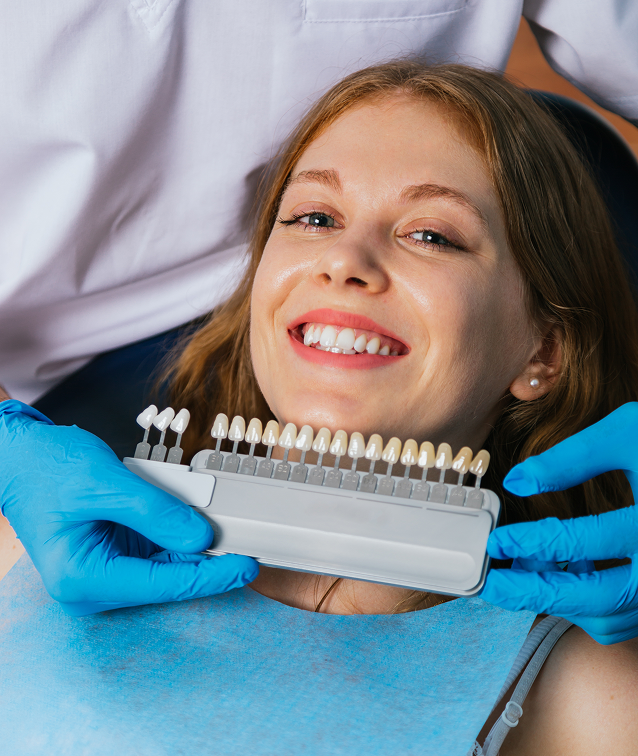
The colour of your veneers can be customised to match surrounding teeth or brighten your overall smile, depending on your goals. - Tooth shape and contouring:
The shape and size of the dental veneers are tailored to complement your bite and facial features. - Surface texture and finish:
A smooth, light-reflective finish helps veneers resemble natural teeth under various lighting conditions. - Placement technique:
Precise positioning by your dentist helps create natural-looking veneers that align with your smile, enhancing both appearance and function.
How do veneers stay on your teeth?
Veneers are held in place using a dental adhesive designed to form a strong, lasting bond with your natural tooth. Here’s how they are made to stay securely attached:
- Tooth preparation:
A small amount of enamel is trimmed from the front of the tooth to make room for the veneer and improve bonding strength. - Surface etching:
The prepared tooth is lightly etched to create a textured surface that enhances the adhesive’s grip. - Adhesive application:
A bonding agent is carefully applied to the tooth surface to prepare it for the veneer placement. - Veneer placement:
The custom-made veneer is precisely positioned onto the prepared tooth to match its shape and alignment. - Curing with light:
A special curing light is used to harden the adhesive, setting the veneer firmly in place. - Final adjustments:
Once bonded, the veneer is checked for bite and fit. Any small refinements are made to promote comfort and function.
Do veneers cause discomfort or sensitivity under your gums?
It’s not uncommon to notice mild gum sensitivity after getting veneers. This usually settles within three to five days as your gums adapt to the new shape and surface of the veneers.
Here are some things you can do to help reduce discomfort and promote gum health:
- Maintain gentle oral hygiene:
Brush with a soft-bristled toothbrush and floss carefully around the veneer edges to avoid irritating the gums. - Rinse with salt water:
Swishing with warm salt water a few times a day can help soothe irritated gums and reduce inflammation. - Use a non-alcohol mouthwash:
Choose a gentle, alcohol-free mouthwash to keep the area clean without causing stinging or dryness. - Avoid hard or crunchy foods:
Eat softer foods, such as yoghurt and mashed potatoes, for the first three to five days if your gums feel tender. Chew slowly to reduce pressure.
If you’ve recently received dental veneers and your gums still feel sore after several days, contact our team. We’ll check the fit of your veneers and assess whether any adjustments are needed to keep your gums healthy and comfortable.
Are your teeth sore after getting veneers?
Some people experience mild soreness after getting veneers, particularly in the first few days following the procedure. This is usually short-lived and tends to settle as your teeth and gums adjust.
Here are some common reasons why this might occur after the procedure:
- Tooth preparation:
Removing a thin layer of enamel can lead to mild soreness or tenderness in the affected teeth. - Bonding procedure:
The process of bonding the veneers may cause temporary irritation, contributing to localised discomfort. - Bite adjustment:
If the veneers slightly change your bite, your jaw or surrounding teeth may feel sore until they adapt. - Gum tenderness:
Soreness may occur if the veneers sit near the gumline or cause pressure in surrounding tissues. - Tooth dehydration:
Temporary dryness during the procedure may heighten tooth sensitivity, which can feel like soreness until moisture levels stabilise.
To help ease any soreness after the procedure:
- Use over-the-counter pain relief if needed.
- Avoid very hot or cold foods and drinks, such as coffee, ice cream, or soup, for a few days.
- Eat soft foods like yoghurt, mashed potatoes, or scrambled eggs, and try to chew on the opposite side of your mouth if possible.
- Use a soft-bristled toothbrush and gentle, non-abrasive toothpaste to clean your teeth without irritating the gums or veneer edges.
- Contact your dentist if soreness doesn’t improve within three to five days or becomes more intense.
Can you return to your natural teeth after getting veneers?
After getting veneers, it’s not possible to return to the original condition of your teeth. This is because certain changes made during the process cannot be reversed.
Here’s a breakdown:
- Enamel is reduced:
To prepare the tooth for a veneer, a thin layer of enamel is carefully shaved from the front surface. This step helps the veneer sit flush with the rest of your teeth, preventing it from appearing bulky. However, enamel does not regenerate itself, so this change is lasting. - The tooth surface is changed:
Once the veneer is bonded in place, the tooth’s surface is no longer the same as it was originally. This change can affect how the tooth looks and feels if the veneer is taken off later.
Because of these changes, the natural tooth can’t be restored to how it was before veneers. However, the tooth underneath remains healthy and can continue to function well with a new veneer or other suitable restoration.