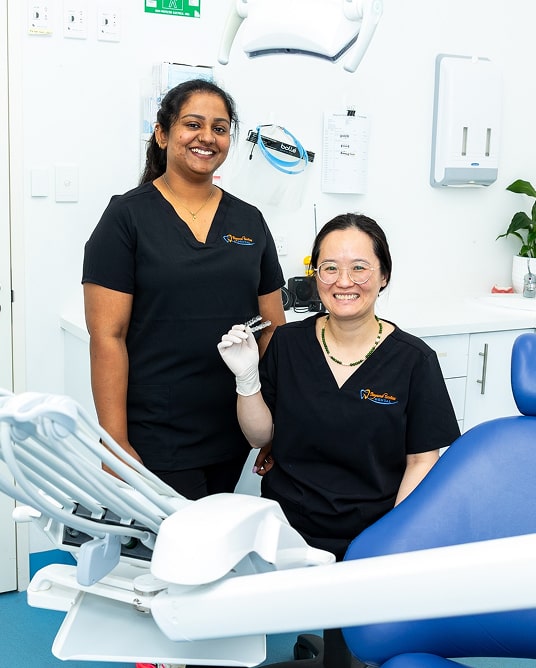
Flexible Dental Payment Options to Suit Your Budget


























Health Funds
We Accept Most Health Funds for Transparent, Easy-to-Manage Dental Visits



PAYMENT OPTIONS
Choose the Right Payment Option for You
Afterpay


DentiCare
Health Funds



SuperCare
Metropolitan Patients Dental Subsidy Scheme (MPDSS)



Child Dental Benefits Schedule (CDBS)
Department of Veterans' Affairs (DVA)

Frequently Asked Questions About Dental Payment Options
What are my options for paying for dental treatment?
Patients may be able to use different payment pathways for dental treatment, depending on their circumstances:
- Health Funds:
Some private health funds may cover part of dental services. Many clinics use HICAPS so eligible claims can be processed at the time of the appointment. - Afterpay:
Costs can be divided into four fortnightly instalments through the Afterpay app. Late or missed payments may incur fees, and all arrangements are subject to Afterpay’s terms and conditions. - DentiCare:
Longer-term instalment plans can be arranged with payments deducted automatically. Eligibility and conditions are determined by DentiCare, and missed payments may result in fees. - SuperCare:
Patients may apply for early release of superannuation for more involved dental treatments. Applications are assessed by the Australian Taxation Office (ATO) under compassionate grounds criteria. Independent financial advice is recommended. - CDBS:
The Child Dental Benefits Schedule provides up to $1,132 in basic dental services over two years for eligible children aged 0–17. - DVA:
The Department of Veterans’ Affairs may fund dental services for eligible Gold and White Card holders, in line with DVA guidelines. - MPDSS:
Eligible public patients may access private dental services at subsidised fees through referral under the Metropolitan Patients Dental Subsidy Scheme.
Patients who are unsure which option applies to them can request further information from the dental team, who can explain the process and direct them to the relevant provider or authority.
Do I need to pay everything upfront on the day of the procedure?
Full payment may be required on the day of some dental treatments. In other cases, payment options such as Afterpay or DentiCare can be arranged, subject to eligibility and provider conditions.
Patients with private health funds may have eligible claims processed at the appointment through HICAPS. The type of treatment and payment pathway chosen will determine how and when fees are settled.
Are payment plans available for all types of dental procedures?
Payment plans may apply to a range of dental treatments, including general, cosmetic, and orthodontic procedures. Availability depends on the provider, treatment type, and eligibility requirements.
Options such as DentiCare and Afterpay can be used for certain services, subject to terms and conditions. Patients who wish to explore payment plans should confirm eligibility and details with the clinic before treatment begins.
Can I spread the cost of more expensive treatments over time?
Some payment pathways allow patients to spread the cost of higher-value treatments over time. Options may include:
- Afterpay:
Patients can divide treatment costs into four equal fortnightly instalments using the Afterpay app. Approval and spending limits are determined by Afterpay, and late or missed payments may result in fees. - DentiCare:
Patients can arrange longer-term instalment plans with automatic direct debits scheduled over an agreed period. Eligibility, terms, and fees are determined by DentiCare and the dental provider. - SuperCare:
Patients may apply for early release of superannuation to fund high-value dental treatments. Applications are assessed by the Australian Taxation Office (ATO) under compassionate grounds criteria, and independent financial advice is recommended.
The availability of these payment options depends on the type of treatment, provider arrangements, and individual eligibility.
How do dental payment plans work?
Dental payment plans enable patients to divide the cost of treatment into smaller instalments instead of paying the full amount upfront. Depending on the provider, payments may be scheduled weekly, fortnightly, or monthly through direct debit.
Options such as DentiCare and Afterpay may offer interest-free instalments for eligible treatments, subject to provider conditions, approval processes, and standard terms and conditions.
Is there a minimum or maximum amount that can be used with a payment plan?
The minimum or maximum amount varies depending on the payment option or support program:
- Afterpay:
This service is generally used for treatment costs up to around $2,000, subject to approval and provider limits. - DentiCare:
Instalment plans can apply to higher-value treatments, with maximum amounts determined by the provider and the agreed plan length. - SuperCare:
There is no standard set amount, as access depends on the patient’s superannuation balance and approval by the Australian Taxation Office (ATO). - CDBS:
Eligible children may access up to $1,132 in dental benefits over two years. - MPDSS:
No general limit applies, since funding depends on the treatment type and the referral details from the public dental service. - Health Funds:
Annual limits vary according to the policy and level of cover held with each fund. - DVA:
A maximum amount is not specified, but treatments must be clinically necessary, and some may require prior approval.
Patients should confirm the details of each payment option in advance to understand how limits may apply to their treatment.
Will I know the full cost before starting treatment?
Patients receive a treatment plan and a written cost estimate before treatment begins. This includes recommended procedures and item numbers, which can be used to confirm potential health fund entitlements.
Costs and available payment options are outlined in advance so patients are informed about the financial aspects of their dental care before deciding how to proceed.
Do payment options cover cosmetic procedures, such as whitening or veneers?
Some payment pathways may be used for certain cosmetic dental procedures, such as whitening or veneers. Availability depends on the type of procedure, the provider’s approval process, and the total treatment cost.
Options such as DentiCare and Afterpay may apply in eligible cases. Patients should confirm with the clinic in advance whether a payment plan can be arranged for cosmetic treatment.
Are there any interest or hidden fees with dental payment plans?
Some dental payment plans may not charge interest if instalments are made on time. Depending on the provider, additional fees such as late payment penalties, account establishment charges, or administration costs may apply.
The terms and conditions of each option specify how payments are managed and what charges may occur. Patients should review these details carefully before choosing a payment plan.
Can I use a payment plan even if I have a private health fund?
What happens if I miss a scheduled payment?
If a scheduled payment is missed, providers may apply fees or other conditions:
- Afterpay:
Late fees may be charged if payments are not made on time. The details are outlined in Afterpay’s user agreement. - DentiCare:
A missed payment fee applies when a scheduled debit is not received. Repeated missed payments may lead to suspension or cancellation of the plan.
Patients should review provider terms carefully before entering an agreement.
Can I claim my health fund benefits at the appointment?
Many dental clinics use HICAPS, which allows patients with eligible private health fund cover to process claims at the time of their appointment.
In these cases, the patient pays the remaining balance that is not covered by their fund. Itemised treatment codes can be provided in advance so patients can confirm entitlements directly with their health fund.
Do I need to undergo a credit check to access a payment plan?
Credit check requirements differ depending on the payment option:
- Afterpay:
A soft credit check may be performed during sign-up, and a full credit check may occur if a higher spending limit is requested. - DentiCare:
A credit check is not required. Eligibility is determined by DentiCare according to its terms and conditions. - SuperCare:
A credit check is not required. Approval is based on the Australian Taxation Office’s (ATO) compassionate grounds criteria.
Patients should review the requirements of each provider before applying for a payment plan.
How do I apply or set up a payment option?
The process for applying or setting up a payment option depends on the provider:
- Afterpay:
Patients can download the Afterpay app, complete the registration process, and link a debit or credit card. Afterpay determines approval and spending limits. - DentiCare:
Patients may be offered a DentiCare plan once a treatment estimate is provided. A secure link is sent to confirm details and activate the plan. - SuperCare:
Applications for early release of superannuation are managed by SuperCare. Required paperwork, including medical documentation, is submitted to the Australian Taxation Office (ATO), which determines eligibility. - Government Programs:
Programs such as CDBS, DVA, or MPDSS have specific eligibility requirements. Patients should confirm these details with the relevant authority or clinic before treatment begins.
Each option has its terms, conditions, and approval processes that must be met before use.