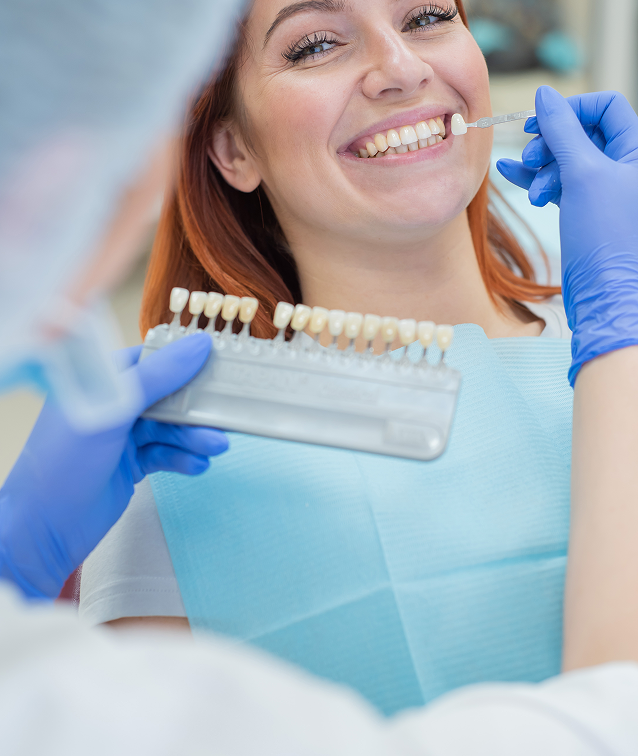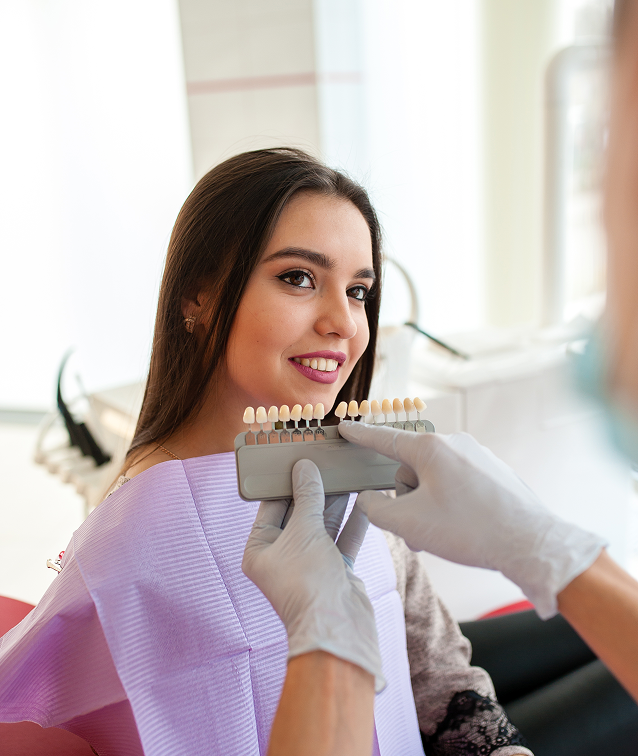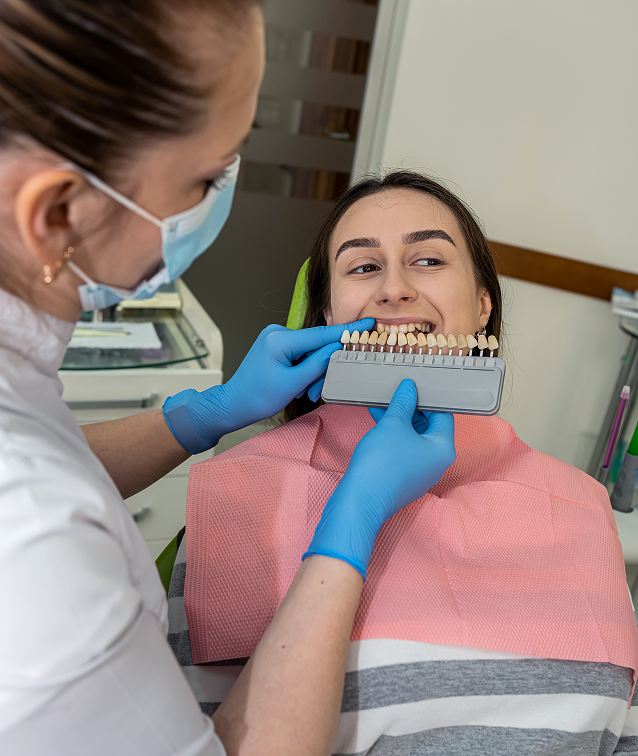


















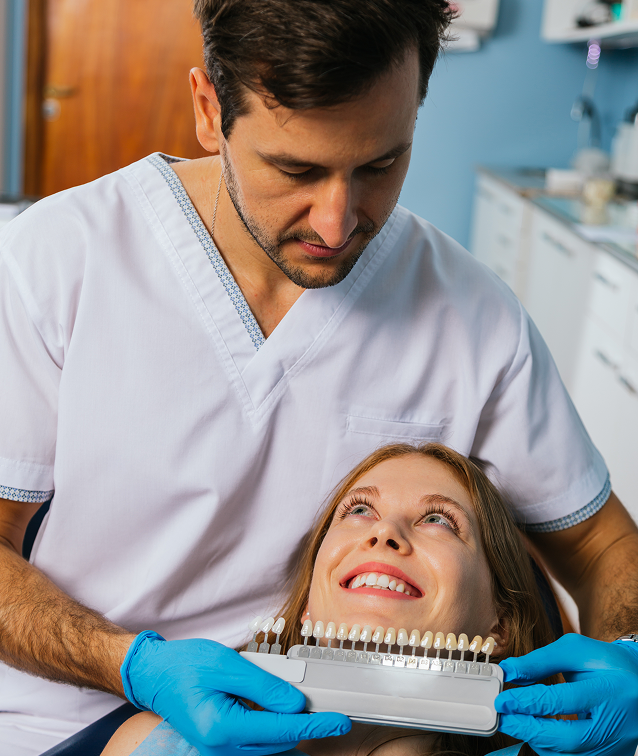
Discover Porcelain vs Composite Veneers That Fit Your Smile Goals
KNOW THE DIFFERENCE
Choosing the Right Fit Between Porcelain and Composite Veneers
There’s a lot to consider when weighing up veneer options. Porcelain is known for its strength and stain resistance. Composite is quicker to apply and more affordable, but it may not last as long. Without clear guidance, the differences can feel confusing. Some people decide based on cost alone and later find the outcome doesn’t match their needs. Knowing how each type performs helps you choose a treatment that aligns with your lifestyle and expectations.
A comparison of porcelain vs composite veneers highlights differences in appearance, durability, and maintenance. This knowledge helps guide a more personalised discussion with your dental professional. It also allows you to explore what suits your smile goals, routine, and long-term care preferences.
SMARTER SMILE PLANNING
Why Understanding Veneer Differences Leads to Better Results
Clearer Care Expectations
Being aware of the upkeep for each type helps you plan realistically. You’ll have a better idea of what each option may require in day-to-day care and appearance.
Realistic Time Planning
Treatment timeframes vary. Understanding how long each type takes helps you decide what fits your schedule. You might prefer a quicker option or feel comfortable with multiple visits.
Smarter Cost Decisions
Some options cost more upfront but last longer. Recognising this helps you weigh initial expense against longevity. It also makes planning easier, with clearer expectations and less guesswork.
Considering Dental Veneers? Book Your Consultation
If you’re exploring dental veneers in Perth, we begin with a personalised consultation. Your oral health, goals, and preferences guide the recommendations provided for treatment.

DESIGNED FOR YOU
Can You Get Dental Veneers? Here’s Who Qualifies
1 Cosmetic Smile Concerns
2 Healthy Teeth and Gums
3 Clear, Realistic Expectations
4 Consistent Oral Habits
YOUR PATIENT JOURNEY
Know What to Expect From Your Dental Veneer Treatment
Consultation and Scans
Your dentist will examine your teeth, discuss your goals, and take digital scans or impressions. This helps plan the veneer design and check if it suits your situation.
Tooth Preparation
A thin layer of enamel is gently removed to make space for the veneers. This allows the new surface to fit naturally and match the nearby teeth.
Dental Veneer Placement
Once the veneers are ready, they’re bonded to the prepared teeth. Your dentist checks for proper fit, shade, and shape to match your natural smile.
Final Adjustments
Small refinements may be made for comfort or aesthetics after placement. Your dentist might smooth the edges, polish the surfaces, or explain how to care for your veneers at home.
IMPORTANT CONSIDERATIONS
Being Informed About Dental Veneer Treatment Risks and Limitations
1 Irreversible Tooth Reduction
2 Potential for Damage
3 Colour Choice Limitation
4 May Not Suit Everyone
Accessible Dental Care
Payment and Funding Options for Eligible Patients
We provide information about available payment and funding options that eligible patients may access to assist with managing treatment costs.
Disclaimer:
- Flexible payment options are available (e.g. Afterpay, Denticare, SuperCare).
- All payment plans and subsidies are subject to provider eligibility criteria, approval processes, and individual circumstances.
- Terms, conditions, fees, and lending criteria apply.
- Please speak with our team for full details before proceeding.
Afterpay
Afterpay enables eligible patients to spread dental treatment costs across four instalments. This option may assist with scheduled payments. Terms and conditions apply, and patients should confirm their eligibility before using this service.
Learn MoreDenticare
Denticare provides approved payment plan options for eligible patients. This option is subject to approval and eligibility criteria, and patients should confirm details directly with Denticare before starting treatment.
Learn More

Health Funds
We accept most major health funds for eligible dental services. Benefit amounts differ by fund and level of cover. Patients should confirm entitlements with their health fund before treatment, as benefits and gap payments vary between providers.
Learn MoreSuperCare
Through SuperCare, eligible patients may apply for early release of superannuation to fund approved dental treatments. This process is subject to ATO approval and strict eligibility criteria. Patients should confirm their eligibility before undergoing a procedure.
Learn MoreMPDSS
The Metropolitan Patient Dental Subsidy Scheme (MPDSS) may provide eligible patients with subsidised dental care. Availability depends on specific criteria set by government health services. Patients should confirm eligibility and conditions with their local health authority before booking.
Learn MoreCDBS

The Child Dental Benefits Schedule (CDBS) provides eligible children aged 0–17 with access to certain dental services, funded by Medicare. Conditions and annual limits apply. Parents should confirm eligibility through Medicare before commencing treatment under the scheme.
Learn MoreDVA
Dental care may be available to eligible Department of Veterans’ Affairs (DVA) health card holders. Treatment and benefits depend on card type and entitlements. Patients must confirm eligibility and requirements with DVA before accessing services.
Learn MoreHealth Funds
We Accept Most Health Funds for Transparent, Easy-to-Manage Dental Visits
MEET YOUR DENTISTS
Dedicated Dental Team Focused on Comfort and Care
Dr. Karthik is a fully qualified dentist with more than 23 years of clinical experience. Since completing his Bachelor of Dental Surgery in 2002, he has developed a strong interest in surgical procedures, dental implantology, and clear aligner systems. He holds a Master’s degree in Clinical Implantology from UCLA and has undergone comprehensive training in digital treatment planning and orthodontic aligner therapy.
His work is primarily focused on surgical extractions, implant placement, and managing complex treatment plans. He is dedicated to continuous learning and consistently integrates evidence-based techniques into his daily practice. Outside of dentistry, he enjoys playing backyard cricket and badminton with his sons, as well as practising mindfulness and maintaining a balanced lifestyle.
Dr. Karthik earned a Master’s in Clinical Implantology from UCLA, focusing on implant systems, surgical techniques, and oral rehabilitation.

Dr. Behnoush is a dentist with more than 15 years of clinical experience. She gained her qualification through the Australian Dental Council in 2008 and has been practising in the country since 2009. She communicates clearly with patients and takes time to explain treatment options, especially during procedures that may be new or feel overwhelming.
She provides care across all aspects of general dentistry, with special interests in Invisalign, cosmetic treatments, and restorative work, such as crowns and bridges. She is dedicated to continuous learning and regularly attends continuing education programs. Outside of dentistry, she enjoys family time, active living, and being engaged in her local community.
Dr. Behnoush is a member of the Australian Dental Association and upholds national clinical standards and professional codes of conduct.

As a Senior Dentist, Dr. Julija focuses on preventive care and communication. She completed her Bachelor of Dental Surgery in 2006 and has more than 15 years of experience. Her calm, friendly approach helps patients feel at ease. She takes the time to explain treatment options and values building lasting relationships through clear and respectful communication.
She provides a wide range of dental services, including preventive, cosmetic, paediatric, extraction, and alignment treatments. She tailors treatment plans to each individual and stays current with evolving techniques. She enjoys cooking and cycling and regularly joins her family in the City to Surf walking challenge, combining fitness with community involvement.
Dr. Julija participates in professional development courses both domestically and internationally to stay current with the latest developments in dentistry.
Dr. Julija is a member of the Australian Dental Association - Western Australia (ADAWA), upholding ethical practice and professional standards in dentistry.
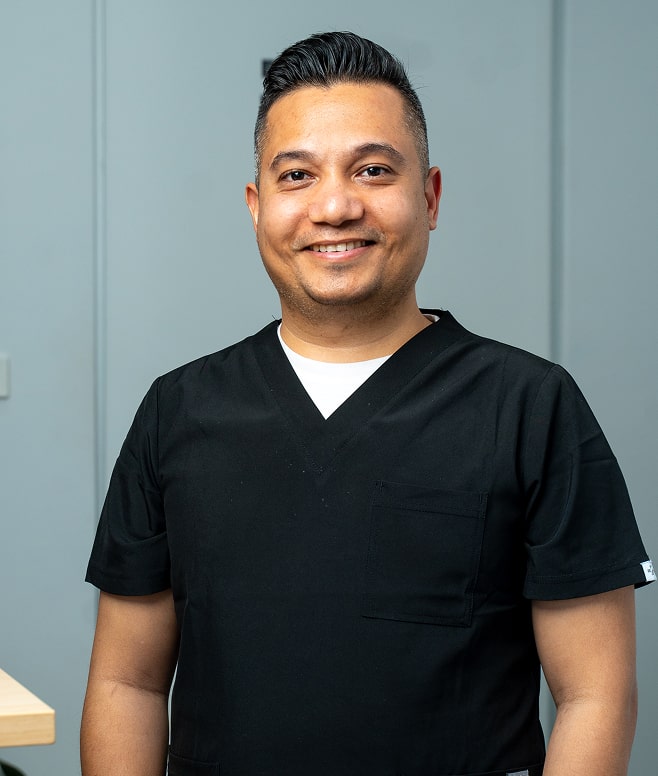
Dr. Siddharth is a dentist providing prosthodontic and implant care. He also provides restorative care, including dentures, crowns and bridges, veneers, and full mouth rehabilitation. He focuses on detail and long-term treatment planning, using a methodical approach shaped by patient goals and needs. His calm and clear communication helps patients navigate their treatment with clarity and understanding.
He enjoys creative pursuits, such as drawing, sketching, cooking, and dancing. These interests reflect his attention to shape, form, and balance—qualities that align with his approach to dental restoration and aesthetics. He works closely with patients on treatment options that are functional and designed with comfort and longevity in mind.
Dr. Siddharth completed his dental degree in India prior to registering locally, adding international clinical training to his restorative and implant work.
- Dr. Siddharth is a Fellow of the Indian Society of Oral Implantologists (ISOI), a professional body dedicated to implant training and clinical development.
- He also holds a Fellowship with the International Congress of Oral Implantologists (ICOI), an organisation that promotes global collaboration in implant dentistry.

Dr. Abha is a dentist with a Master’s degree in Periodontology and Implantology. She gained her dental qualification in India and registered with the Australian Dental Council. Her background in surgical and implant dentistry is combined with a calm, clear approach to patient care. She focuses on communication and helping patients understand treatment options that suit their individual needs.
She provides preventive, surgical, and implant treatment with careful attention to detail. She applies modern techniques guided by current research and encourages patients to remain committed to their oral health. Outside of dentistry, she spends her time with family, reading, listening to music, travelling, and exploring new places and cultures.
- Dr. Abha completed a Master’s degree in Periodontology and Implantology in India before gaining registration to practise dentistry locally.
- She frequently attends workshops and conferences domestically and internationally to maintain knowledge of current trends and developments in clinical techniques.
- Dr. Abha is a Fellow of the International Congress of Oral Implantologists (ICOI), an international organisation focused on education in implant dentistry.

Dr. Amy joined the team after completing her Doctor of Dental Medicine at the University of Western Australia. She also holds a PhD in Materials Science from Curtin University, which provided valuable insight into dental materials and their clinical performance. She provides general dental care with a particular interest in implants, orthodontics, and clear aligner treatment, such as Invisalign.
She engages in continuing professional education to stay aligned with advancements in general and restorative dentistry techniques. She takes care to create a calm, comfortable environment, especially for patients who may feel anxious about dental visits. She is fluent in both Mandarin and Cantonese and communicates clearly with patients of all backgrounds.

Dr. Bashi offers preventive, restorative, paediatric, endodontic, prosthodontic, and minor oral surgery care in both private and community settings. Her background in clinical dentistry and public health shapes her patient-focused approach, particularly in education and prevention. She communicates clearly with patients of all ages and is committed to providing care that is personalised and responsive to each patient’s unique needs and treatment goals.
During her postgraduate studies, she completed an internship with a healthcare consulting team, contributing to public health projects in various regions. She continues to pursue professional development and enjoys combining clinical care with broader health perspectives. In her spare time, she enjoys basketball, scenic photography, video editing, travel, and exploring diverse cuisines.
Dr. Bashi completed her Bachelor of Dental Surgery at the University of Peradeniya in Sri Lanka before gaining registration to practise in the country.
- Dr. Bashi is a member of the Australian Dental Association and follows its standards for continuing education and ethical patient care.
- She is also registered with the Sri Lanka Medical Council, reflecting her international clinical training and professional background.

Dr. Neha is a general dentist with postgraduate training in paediatric dentistry and over 13 years of clinical experience. She worked for nine years in Abu Dhabi, focusing on children's oral health. She recently gained her local registration through the Australian Dental Council and now provides care to patients of all ages, including restorative, preventive, and paediatric dentistry.
She has a particular interest in root canal therapy, minimally invasive treatment, and inhalation sedation for anxious patients. She values communication and clarity in every appointment and aims to create a calm environment tailored to each patient’s needs. Her interests outside of dentistry include travel, creative writing, and spending time with her family.
Dr. Neha holds a Bachelor of Dental Surgery and a Master’s in Paediatric Dentistry and has worked clinically in Abu Dhabi for over nine years.

Dr. Karthika completed her Bachelor of Dental Surgery in India and worked in both public and private clinics before settling in Perth. She provides general and restorative care, with a strong interest in preventive dentistry and early intervention. She values collaboration and patient education, helping patients feel more comfortable in making informed choices about their dental care.
She continues to expand her clinical knowledge through continuous professional development. She works gently and thoughtfully with nervous patients, helping them feel more at ease during their appointments. Aside from her work in dentistry, she enjoys gardening, trying new recipes, tackling home DIY projects, and sharing meals with family and friends.
Dr. Karthika earned her Bachelor of Dental Surgery overseas and later gained registration to practise as a general dentist locally.
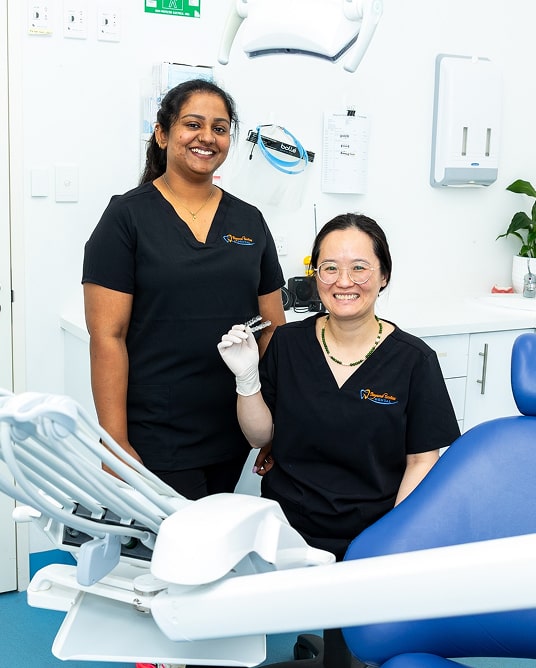
KNOW THE DETAILS
Frequently Asked Questions
How do I choose between composite and porcelain veneers?
Porcelain and composite veneers are both options for improving the appearance of teeth affected by chips, gaps, uneven edges, or discolouration. While both approaches aim to enhance your smile, they differ in how they’re made, applied, and maintained.
Here are a few things to consider when deciding which type might suit you:
- Appearance:
- Porcelain veneers are crafted in a lab and have a finish that reflects light, much like natural tooth enamel. They’re often chosen when a more refined or polished result is wanted.
- Composite veneers are shaped directly on the teeth and can still look natural, though the finish may be slightly less translucent.
- Longevity:
- Porcelain veneers may remain functional for many years, but durability varies according to patient habits and dental care.
- Composite veneers are generally considered less durable and may require replacement sooner, depending on individual circumstances.
- Cost and application:
- Composite veneers are applied chairside in a single visit, which lowers both treatment time and cost.
- Porcelain veneers involve lab-made restorations and custom fabrication, contributing to a higher cost.
- Time involved:
- Composite veneers are usually completed in one appointment with minimal preparation.
- Porcelain veneers require at least two visits due to the laboratory process and custom design phase.
- If something goes wrong:
- If composite veneers chip, they can usually be smoothed or reshaped during a visit.
- Porcelain veneers can’t be adjusted in the same way and may need to be replaced if damaged.
- How much change you’re looking for:
- Composite may suit those looking for subtle tweaks in shape or colour.
- If you’re after more noticeable changes, such as covering darker stains or reshaping multiple teeth, porcelain may be a better fit.
- Everyday care:
- Composite veneers require regular brushing and flossing and are more susceptible to staining from tea, coffee, red wine, and tobacco.
- Porcelain veneers also need consistent oral hygiene, but they are more stain-resistant and retain their colour over time.
Whether you’re considering dental veneers for chipped teeth, discolouration, or reshaping, we’ll guide you through the options and recommend what’s appropriate for your smile. If you’re thinking about getting started, we welcome you to book a consultation.
How long do porcelain and composite veneers typically last?
Porcelain veneers generally last longer than composite resin veneers. Here’s an overview:
- Porcelain veneers:
They can remain in good condition for at least 10 years and up to 12-25 years. This depends on factors like oral hygiene, clinical technique, and individual habits. - Composite resin veneers:
Composite resin veneers are generally considered less durable than porcelain options. The length of time they remain satisfactory varies between patients and is influenced by oral health, habits, diet, and advice from a registered dentist.
One study noted that while composite resin is commonly used to mask tooth discolouration or improve uneven tooth shapes, it tends to have limited longevity. This is due to its greater tendency to stain, wear down, or break at the edges over time, which can reduce the appearance of the veneers. In response to these limitations, porcelain veneers were introduced as a more durable option, offering long-term aesthetics with added resistance to wear and discolouration.
What factors influence how natural veneers look?
Both porcelain and composite veneers are designed to enhance your smile. However, they differ in how closely they replicate the appearance of natural teeth.
Porcelain veneers
- Translucency:
Porcelain has a glass-like quality that allows light to pass through it in a way that closely resembles natural tooth enamel. - Light reflection:
These veneers reflect light in a manner similar to natural teeth, helping them blend smoothly with the surrounding teeth. - Customisation:
Porcelain veneers are crafted in a dental lab and can be tailored in shade, texture, and shape for a lifelike result. - Colour stability:
Porcelain is resistant to staining, which helps maintain its natural-looking appearance over time.
Composite veneers
- Material appearance:
Composite resin is sculpted directly onto the teeth and can be colour-matched to natural enamel. However, it may not offer the same depth or translucency as porcelain. - Light reflection:
The difference between porcelain and composite veneers is noticeable in how they reflect light. Composite may appear slightly less translucent than natural enamel, especially under bright lighting. - Customisation:
These veneers are shaped chairside during your appointment. They may offer less detailed customisation in terms of shape or surface texture compared to porcelain. - Long-term appearance:
Composite materials are more likely to stain or wear down over time, which can affect how natural they continue to look.
Both types can deliver pleasing results. However, porcelain is often chosen by patients when a highly realistic, natural appearance is their priority, especially for front teeth. If you’re weighing up porcelain vs composite veneers, schedule a consultation to explore your options. We’d be happy to walk you through their differences and answer any questions you may have.
What are the disadvantages of composite veneers?
Composite veneers can be a cost-effective and minimally invasive way to enhance your smile. However, there are a few limitations to keep in mind:
- Lower durability:
Composite resin is more prone to wear, chipping, or edge fractures over time. This is especially true for individuals who clench or grind their teeth or have heavy bite forces. - Staining potential:
Composite material is more porous than porcelain, which makes it more susceptible to staining over time. Regular exposure to coffee, tea, red wine, or smoking can increase the likelihood of discolouration. - Shorter lifespan:
Composite veneers are usually regarded as less durable than porcelain veneers. How long they remain satisfactory varies for each patient and depends on individual circumstances. - Loss of shine:
The surface of composite veneers can become dull over time. Occasional polishing or touch-ups may be needed to maintain their appearance. - Less lifelike appearance:
While composite veneers can still look natural, they may not reflect light as effectively as porcelain. This can make them appear slightly less lifelike in some lighting conditions.
Choosing composite veneers can be a simple way to improve the look of your teeth, but it’s important to understand their limitations. For those considering composite veneers, we offer personalised consultations to discuss your options and long-term expectations.
Can composite veneers be whitened if they stain?
A laboratory-based study explored how stained composite materials respond to in-chair bleaching and polishing. The researchers tested composite samples exposed to coffee and tea to assess how different treatments affected their appearance.
Here’s what the study found:
- In-chair bleaching using 15% hydrogen peroxide partially reversed staining on composite materials, helping to restore colour closer to the original shade.
- Repolishing the surface also reduced staining, though the effect was more limited compared to bleaching.
- Combining bleaching and repolishing led to greater stain reduction than using either method alone.
- The findings were based on laboratory testing, so real-world results may vary depending on the material and clinical conditions.
While composite veneers do not lighten like natural teeth, the study suggests that some improvement in appearance may be possible through professional bleaching and polishing. A dentist can discuss whether this might be an option, depending on the material used and the type of staining.
Do composite veneers damage your teeth?
Composite veneers do not usually damage the teeth because they are applied to the outer surface and often require little or no alteration of natural enamel. They are considered a conservative cosmetic option that maintains the underlying tooth structure.
Here’s how they interact with your teeth:
- Minimal enamel removal:
In many cases, little or no natural enamel is removed, although this can depend on individual smile goals and tooth shape. - No impact on the inner tooth:
The resin is applied to the surface and does not affect the internal layers of the tooth, such as the dentine or pulp. - Bonded to the surface only:
The composite material attaches to the outer enamel layer without drilling into deeper tooth structures. - May be adjusted or replaced:
In certain cases, composite veneers may be adjusted or replaced with limited changes to the tooth surface. - Oral hygiene is important:
If plaque builds up around chipped or ageing veneers, there may be an increased risk of decay or gum irritation near the edges.
If you’re wondering whether composite veneers might affect your natural teeth, we’re here to talk you through it. We offer composite veneers as a minimally invasive option that’s designed to preserve your existing tooth structure.
What happens if you don’t like your dental veneers?
If you’re unhappy with your veneers, there are different ways this may be addressed. This depends on the material used, whether they are temporary or long-term, and the reason for your dissatisfaction.
Here’s what may happen:
- You may be able to request adjustments:
With composite veneers, minor reshaping or smoothing is often possible. - The veneers might need to be replaced:
If you have porcelain veneers and want changes made, the existing veneer may need to be removed and a new one created. - The temporary phase allows for feedback:
This stage is a good time to share any concerns, as changes can often be made before the final veneers are bonded. - You may need to schedule a follow-up appointment:
Many concerns are managed through follow-up visits, where shape, colour, or bite alignment can be reviewed. - Your dentist may discuss options for revision:
Depending on your tooth structure and the veneers in place, your dentist can explain which changes may be possible.
Raising concerns early, especially during the planning or temporary phase, allows more room for adjustments and personalisation.
How much do porcelain and composite veneers cost?
The cost of dental veneers varies depending on the specifics of your treatment plan. Below are some of the factors that may influence the overall cost:
- Type of veneer material:
The cost of veneers can vary depending on the material used. At our clinic, for example:- Porcelain veneers usually range from $1,700 to $2,500 per tooth.
- Composite resin veneers generally cost between $455 and $820 per tooth.
- Number of veneers placed:
The total cost may vary depending on how many veneers are placed and how the clinic structures its pricing. - Complexity of the case:
Cases involving discolouration, chips, or adjustments to tooth shape may require additional steps that influence the cost. - Time and skill involved:
Fees may vary depending on the provider’s experience and the time involved in planning and placing the veneers. - Type of fabrication:
Porcelain veneers are made in a dental laboratory, which can add to the overall cost and time involved. On the other hand, composite veneers are usually applied directly in the clinic, often allowing for a quicker and more cost-effective process. - Additional procedures:
Additional treatments, such as teeth whitening, enamel contouring, or gum reshaping, may be recommended beforehand and add to the overall cost.
If you’re considering composite or porcelain veneers, get in touch to schedule an appointment. We’ll assess your teeth, outline the options available, and provide a clear breakdown of costs based on your needs.
Can I replace my composite veneers with porcelain later?
In many cases, composite veneers can be replaced with porcelain veneers, depending on your dental condition and goals. Patients sometimes consider this option when their composite veneers have aged or if they’re looking for a different long-term result.
Here’s what the process may involve:
- Assessment of existing veneers:
Your dentist will examine the condition of your current veneers and teeth to see whether porcelain is appropriate. - Removal of composite material:
The existing composite is carefully removed to avoid unnecessary loss of natural tooth structure. - Tooth preparation for porcelain:
Porcelain veneers often require some enamel to be removed to allow a proper fit and positioning. - Impressions and customisation:
Moulds or digital scans are taken so that the porcelain veneers can be individually crafted in a dental lab. - Temporary veneers, if needed:
A temporary set may be placed while the final porcelain veneers are being made. - Bonding the new veneers:
Once ready, the porcelain veneers are bonded to the teeth using a dental adhesive.
Replacing composite veneers with porcelain is a common request. If you’re exploring porcelain veneers, book a consultation with our team today. We can assess your current veneers and outline what’s involved in making the switch.
Can I combine porcelain and composite veneers in one treatment?
In some cases, porcelain and composite veneers may be used together in a treatment plan, depending on your goals and the condition of your teeth.
Here’s how this is done:
- Assessing which teeth need which material:
The dentist will evaluate each tooth to determine whether it may benefit more from porcelain or composite based on location, visibility, and structural needs. - Using porcelain on high-aesthetic teeth:
Porcelain veneers are often chosen for the front teeth, where long-term appearance and durability are more important. - Applying composite to less prominent teeth:
Composite veneers may be used on teeth that are less visible or require only minimal cosmetic changes. - Matching shade and finish:
To maintain a cohesive appearance, both veneer types are carefully matched in colour, shape, and surface texture. - Planning the procedure in stages:
Depending on the case, composite may be placed in-chair, while porcelain veneers are fabricated in a lab and placed later.
Do composite veneers require more maintenance than porcelain?
Yes, composite veneers generally require more maintenance than porcelain veneers. This is mainly due to how the materials behave over time in the mouth.
Here’s why composite veneers often need more upkeep:
- More prone to staining:
The resin material in composite veneers is more porous than porcelain. This allows pigments from foods, drinks, and smoking to settle into the surface over time. - Softer surface:
Composite is a softer material and is more likely to chip, scratch, or wear down with regular use. - Loss of polish:
Composite can lose its surface shine over time, which may affect the appearance and require repolishing. - Shorter expected lifespan:
Composite veneers generally have a shorter expected lifespan than porcelain. However, this can vary depending on factors like wear, oral hygiene, and daily habits. - Changes in appearance:
Composite materials are more likely to dull, discolour, or change texture, especially if oral hygiene is inconsistent.
How do porcelain and composite veneers address tooth discolouration differently?
When addressing significant tooth discolouration, the material used for veneers can influence how effectively the stains are concealed. Both composite and porcelain veneers may be used for this purpose, but they differ in how they respond to darker underlying shades.
Here’s how the difference between porcelain and composite veneers matters in this context:
- Porcelain has lower translucency:
Porcelain veneers are less translucent than composite, which can help them mask deeper or uneven discolouration, particularly when whitening alone is not suitable. - Custom shading in lab-made porcelain:
Porcelain veneers are created in a dental lab, allowing the colour and opacity to be tailored to help manage darker tooth shades. - Composite may have more visible staining underneath:
While composite resin can brighten tooth colour, it may be less effective at disguising severe internal discolouration due to its higher translucency. - Composite can be layered:
In some cases, composite materials may be applied in layers to reduce the appearance of moderate staining. However, this depends on the extent and location of the discolouration. - Differences in long-term stain resistance:
Porcelain surfaces tend to resist new staining more effectively than composite, which may contribute to a more consistent appearance over time.
A consultation with your dentist can help assess your tooth colour and explore which approach may be more appropriate for your specific goals.